
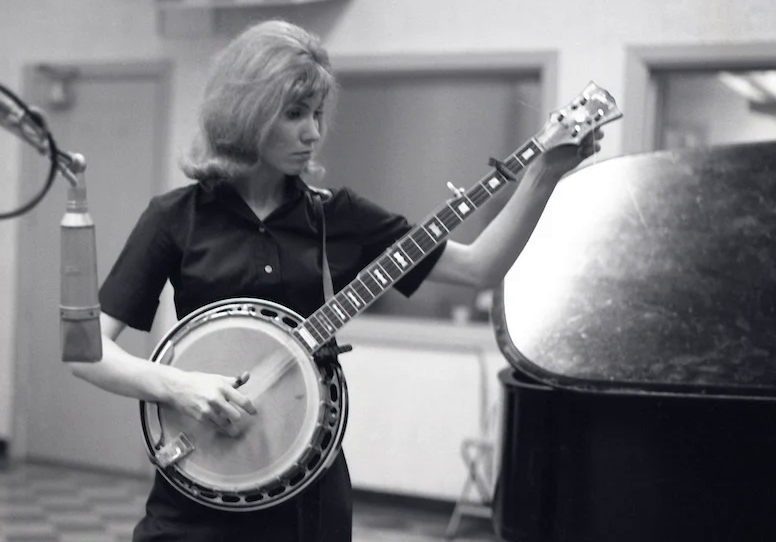
Few figures in American music can match the mix of musical brilliance, trailblazing tenacity, and unforgettable personality that defines Roni Stoneman. As a core member of the legendary Stoneman Family Band, a gifted five-string banjo player, and the beloved “iron-pantsed” character on Hee Haw, Roni forged a career that defied expectations and brought bluegrass and old-time music to millions.
Widely known as the “First Lady of the Banjo,” she remains a vital link between the roots of Appalachian music and modern country entertainment.
Born Into a Musical Dynasty
Veronica Loretta Stoneman was born on May 5, 1938, in Washington, D.C., the youngest of 23 children of Ernest “Pop” Stoneman and his wife Hattie. Pop Stoneman was a recording artist and folk music pioneer who helped define the early sound of country music in the 1920s.
Growing up in such a large and intensely musical family, Roni was immersed in string band music, gospel harmonies, and mountain ballads from birth. Her older siblings formed the core of The Stoneman Family Band, and Roni soon followed in their footsteps, picking up the banjo in her early teens.
Breaking Barriers on the Banjo
In an era when few women were known for playing the banjo—especially in high-speed, driving bluegrass styles—Roni Stoneman stood out. She was inspired by greats like Earl Scruggs but quickly developed her own fierce and energetic style.
She became known for:
- Her three-finger picking technique
- Lightning-fast rolls and improvisation
- A flashy, fearless stage presence
Roni could hang with the best of them—whether jamming at bluegrass festivals or holding down complex instrumental breaks on national television.
A Star on Hee Haw
Roni’s fame exploded in the 1970s and 1980s thanks to her long-running role on the hit TV variety show Hee Haw, where she portrayed the iconic character “Ida Lee Nagger,” a rough-talking, washboard-wielding housewife.
With wild hair, an apron, and a relentless nagging energy, Ida Lee became a fan favorite, helping Roni showcase both her comedic timing and down-home charm.
But behind the comedy was serious musical talent—Roni often performed blazing banjo solos on the show, helping introduce bluegrass instrumentation to millions of American households.
The Stoneman Family and the National Stage
Roni was part of the Stoneman Family Band’s resurgence in the 1960s, when they won the Country Music Association’s Vocal Group of the Year Award in 1967. The family’s blend of old-time, gospel, and early bluegrass, delivered with vibrant stagecraft and multi-instrumental skill, made them a favorite at festivals and on television.
The Stonemans’ legacy remains a vital thread in the fabric of American roots music, and Roni’s banjo playing was a key ingredient in their distinctive sound.
A Life of Grit, Grace, and Perseverance
Roni’s journey was far from easy. Her life included abusive relationships, poverty, and years of struggle in an industry that often sidelined women—especially those who dared to lead with talent and grit.
She chronicled much of this in her candid and acclaimed memoir, “Pressing On: The Roni Stoneman Story” (2007), co-authored with Ellen Wright. The book reveals her deep love for music, her unbreakable spirit, and her fierce independence.
Influence and Honors
Though often overlooked in mainstream bluegrass histories, Roni Stoneman’s influence is enormous:
- She inspired a new generation of female banjo players
- She challenged stereotypes of how women could perform in bluegrass and country music
- She kept old-time banjo alive in a changing cultural landscape
Roni has received honors and praise from traditional music circles and continues to be recognized as a trailblazer and cultural icon.
Conclusion
Roni Stoneman is more than a banjo player—she’s a force of nature. Her playing is fiery, her personality unforgettable, and her story one of courage, resilience, and unshakable love for music.
She brought bluegrass into American living rooms, inspired countless young musicians, and proved that a woman with a banjo can hold her own with anyone, anytime, anywhere.
Whether tearing up a solo on the five-string or cracking up audiences on Hee Haw, Roni Stoneman has earned her place as a true legend of American music.
 World Bluegrass Day®
Leave a comment