
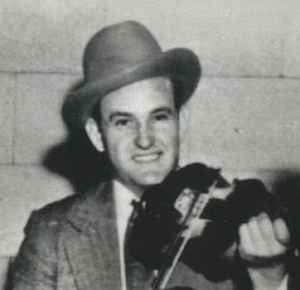
When people talk about the early days of bluegrass, they often mention Bill Monroe, Lester Flatt, and Earl Scruggs—the big names who defined the genre’s direction. But standing just behind the spotlight, with a fiddle under his chin and a powerful tone in his bow, was Tommy Magness, one of the most influential fiddlers in bluegrass and early country music history.
A master of longbow phrasing, clean tone, and emotional delivery, Tommy Magness provided the fiddle foundation for the Blue Grass Boys just as their sound was taking shape. His playing bridged old-time string band traditions and the emerging drive and precision that would characterize bluegrass.
Early Life and Musical Roots
Tommy Magness was born on July 9, 1916, in Virginia. He grew up in a musical family and quickly found a natural voice in the fiddle. Like many rural musicians of the early 20th century, Magness learned by ear, developing a fluid style influenced by Appalachian traditions, swing, and the growing world of radio barn dance music.
By his late teens, he had become a sought-after fiddler and began performing with regional acts and traveling shows across the South.
Playing with Roy Hall and Bill Monroe
In the early 1940s, Magness gained national attention as a member of Roy Hall and the Blue Ridge Entertainers, a string band that blended old-time, gospel, and what was then called “hillbilly” music. His work with Hall was well regarded, but it was his tenure with Bill Monroe that secured his place in the bluegrass legacy.
Tommy Magness joined Bill Monroe and the Blue Grass Boys in 1942, right before Lester Flatt and Earl Scruggs would join and crystalize the “bluegrass sound.” Even before Scruggs’ arrival, Magness’ fiddle work helped establish the emotional and rhythmic core of Monroe’s evolving style.
On stage and radio broadcasts, his solos often soared—melodic, rich, and expressive, contrasting beautifully with Monroe’s aggressive mandolin and Flatt’s smooth vocals.
A Distinctive Fiddle Voice
What made Magness stand out was his ability to blend sweetness and drive. His longbow technique, influenced by earlier fiddlers like Clayton McMichen, created a smooth, legato phrasing that softened Monroe’s sharp mandolin edges without ever losing rhythmic intensity.
His fiddle playing wasn’t flashy—it was elegant, lyrical, and deeply emotional, often stealing the show in live sets and radio performances.
Though he didn’t record much with Monroe (due to wartime disruptions and the lack of session documentation), his live radio work left a lasting impression on audiences and on Monroe himself.
A Quiet Career of Influence
After leaving Monroe’s band in the mid-1940s, Magness continued performing with a number of top-tier country and early bluegrass acts. He also worked behind the scenes as a radio musician, studio player, and teacher, mentoring many younger fiddlers in the 1950s and beyond.
Among those who credited Magness with inspiration and instruction were:
- Chubby Wise
- Paul Warren
- Benny Martin
Though he never achieved the fame of his contemporaries, Magness’ influence trickled down through the generations, embedded in the tone and bowing of countless fiddlers who followed.
Legacy and Recognition
Tommy Magness passed away on November 3, 1972, but his legacy remains significant to those who study the formation of bluegrass music.
While he never sought the spotlight, Magness was:
- A key transitional figure between old-time fiddle and modern bluegrass
- Among the first fiddlers to define the Blue Grass Boys sound
- A mentor and model for some of the most important fiddlers of the mid-20th century
His name may not be as well-known as those who came later, but his artistry helped shape what bluegrass fiddle would become.
Conclusion
Tommy Magness was the kind of musician who didn’t demand attention—he earned it with every note. His graceful, expressive fiddle lines added warmth and depth to the emerging bluegrass sound, helping to balance the genre’s drive with a touch of lyrical beauty.
Though history often favors frontmen and headliners, it’s the musicians like Tommy Magness—quiet, masterful, and foundational—who built the stages they stood on.
Today, every fiddler who bows a waltz, dances through a breakdown, or lifts a harmony line owes something to the unassuming genius of Tommy Magness.
 World Bluegrass Day®
Leave a comment