
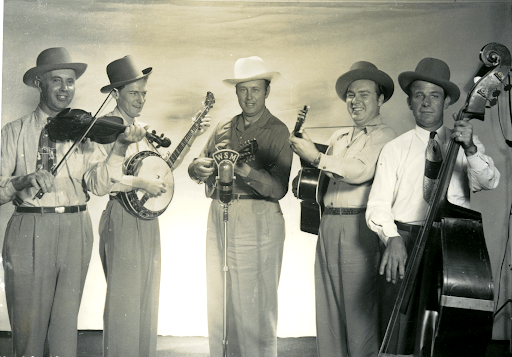
Bluegrass music is instantly recognizable—its drive, sparkle, and high-lonesome energy come from a carefully balanced blend of acoustic instruments working together in perfect conversation. Although many instruments can appear in bluegrass today, the genre was built on five core voices: banjo, mandolin, fiddle, acoustic guitar, and upright bass. These instruments formed the foundation of Bill Monroe’s original Blue Grass Boys and remain the standard ensemble in traditional and contemporary bluegrass alike.
Each instrument brings a unique tone and role, and together they create the rhythmic pulse, melodic clarity, and emotional depth that define the bluegrass sound.
Banjo: The Spark and Rhythmic Engine of Bluegrass
If one instrument instantly signals bluegrass, it is the five-string banjo. Though its origins trace back to West African instruments brought to America by enslaved people, the banjo became a central piece of Appalachian musical life long before bluegrass was born.
The instrument’s revolutionary moment came in 1945, when Earl Scruggs introduced his three-finger picking style to Bill Monroe’s band. Scruggs’ technique—fluid, syncopated arpeggios rolling endlessly forward—created a sound no one had heard before. It became the driving engine of bluegrass rhythm and a defining feature of the genre.
The banjo’s role in bluegrass includes:
- Rhythmic propulsion: The “Scruggs roll” pushes the tempo and energizes the ensemble.
- Virtuosic melody: Banjo breaks provide intensity and excitement.
- Distinctive tone: Bright, metallic, and joyful, the banjo gives bluegrass its unmistakable sparkle.
From Don Reno to J.D. Crowe to Béla Fleck, generations of musicians have expanded the banjo’s vocabulary—but its foundational role remains unchanged.
Mandolin: The Percussive Pulse and High-Lonesome Voice
The mandolin, played with a pick, brings both rhythmic sharpness and melodic clarity to bluegrass. Although it has European origins, it found a new identity in the hands of Bill Monroe, whose aggressive downstrokes, blues-inspired phrasing, and powerful tremolo shaped the sound of bluegrass from the very beginning.
Its primary contributions include:
- The “mandolin chop”: A crisp, off-beat chord that replaces the snare drum in a bluegrass band.
- Melodic leads: Bright, punchy lines cut through the mix with precision.
- Emotional tremolo: Slow songs and waltzes gain warmth and depth from sustained mandolin notes.
The mandolin sits at the rhythmic heart of the ensemble, defining the groove and creating the back-and-forth conversation that bluegrass thrives on.
Fiddle: The Emotional Center and Melodic Soul
The fiddle is the oldest of the bluegrass instruments, deeply rooted in the ballad and dance traditions carried to Appalachia by Scotch-Irish immigrants. In bluegrass, the fiddle provides the music’s emotional center—singing above the band in a voice that can be mournful, joyful, fiery, or tender.
Its role includes:
- Flowing melodic lines: The fiddle adds contour and lyrical phrasing.
- Harmony and fills: It weaves between vocal phrases, commenting on the song.
- Instrumental drive: Fast breakdowns showcase the fiddle’s rhythmic power and technical brilliance.
Players like Chubby Wise, Kenny Baker, Byron Berline, and Stuart Duncan helped shape the fiddle’s modern role in bluegrass, blending old-time tradition with Monroe’s new musical vision.
Acoustic Guitar: The Steady Backbone and Rhythmic Foundation
Often underestimated, the acoustic guitar is the glue that holds a bluegrass band together. In traditional settings, the guitar provides rhythm first, using strong, alternating bass notes and crisp strums that define the timing and harmonic structure of every tune.
Its contributions include:
- Rhythm and timing: The guitar keeps the groove steady and supports the ensemble.
- Chordal structure: It outlines the harmonic progression in every song.
- Lead lines (flatpicking): Thanks to players like Doc Watson, Clarence White, and Tony Rice, the guitar became a powerful lead instrument capable of lightning-fast flatpicked melodies.
While the dobro or banjo may draw more attention, the acoustic guitar’s rhythmic consistency is essential. Without it, bluegrass would lose much of its balance and drive.
Upright Bass: The Bedrock Beneath the Band
The upright bass provides the foundation upon which the entire bluegrass sound is built. Using simple but powerful “boom-chick” patterns, the bass anchors the rhythm, supports the chords, and keeps the band unified.
Its essential roles include:
- Pulse and tempo: The bass sets the rhythmic feel of every song.
- Low-end support: It fills the sonic space with warmth and depth.
- Structural clarity: Bass lines signal chord changes and shape the music’s form.
Classic bassists like Howard Watts (Cedric Rainwater), Tom Gray, and Jack Cooke demonstrated how essential the instrument is to bluegrass, even when it sits quietly behind flashier voices. Without the upright bass, bluegrass loses its grounding and cohesion.
Conclusion: Five Voices in Perfect Conversation
Bluegrass music is a dialogue—each instrument takes turns speaking, supporting, and embellishing the others. The banjo drives, the mandolin snaps, the fiddle sings, the guitar steadies, and the bass anchors. Together, they form the core sound that emerged from Bill Monroe’s vision and still defines the genre today.
These five instruments remain the pillars of bluegrass because of their perfect balance: rhythm and melody, fire and finesse, tradition and innovation. Whether on a festival stage, at a campfire jam, or in a front-porch picking circle, their interplay brings the timeless spirit of bluegrass to life.
 World Bluegrass Day®
Leave a comment