
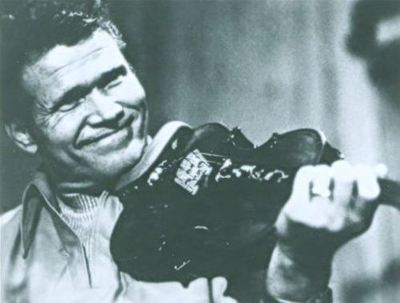
Bluegrass has always carried a kind of electricity—tight harmonies, hard rhythm, and instrumental lines sharp enough to cut the air. But every so often, a player comes along who widens the doorway without weakening the walls. Vassar Clements was that kind of musician: a bluegrass fiddler with the timing of a swing player, the imagination of a jazz improviser, and the deep respect for tradition that kept him welcome on the oldest stages in the genre.
To hear Clements at full flight is to hear bluegrass breathe differently. The notes still drive, still dance, still land with authority—but they also glide. His bow could talk like a singer, laugh like a horn section, and lean into a phrase the way a great storyteller leans into a punchline. Over a career that stretched from the first generation of bluegrass into the era of crossover supergroups, he became one of the most recognizable fiddling voices in American roots music.
Early Life and Musical Beginnings
Vassar Carlton Clements was born on April 25, 1928, in Kinard, Florida, and grew up in Kissimmee. He took up the fiddle as a child—self-taught, persistent, and already curious about what the instrument could do beyond the usual rules. Florida in those years held a lively mix of string-band music, radio country, and traveling performers, and young Vassar absorbed it all with the open appetite of a natural musician.
A pivotal moment arrived early: as a teenager he encountered Bill Monroe and the Blue Grass Boys when they came through Florida. Clements was still in school, but the sound grabbed him—Monroe’s urgent drive, the fierce clarity of the ensemble, the idea that old-time music could be sharpened into something new. By 1949, at just 21, Clements made the journey to Nashville to audition for Monroe, a leap that would place him at the very center of bluegrass history.
Career Highlights and Collaborations
Clements’ first major chapter was written in Monroe’s band. Beginning in 1949, he worked with Bill Monroe for the better part of the next eight years, including key recordings in 1950. Those early Decca sessions helped define what bluegrass would sound like to the public: the fiddle no longer merely decorating the edges, but weaving melody and momentum straight through the heart of the music.
After leaving Monroe in 1957, Clements joined Jim & Jesse and the Virginia Boys, a band that valued polish, harmony, and show-ready professionalism. It was a different environment—less volcanic than Monroe’s world, more structured—and Clements thrived there too. His playing could be as disciplined as any ensemble demanded, but you could still hear the larger musical mind at work behind the notes.
As the decades unfolded, Clements became something rarer than a great fiddler: a great connector. He moved effortlessly between scenes that didn’t always speak the same language. In Nashville, he became a respected session musician. In the wider roots world, he became a name that signaled both authenticity and surprise. Two collaborations, in particular, helped introduce him to audiences well beyond traditional bluegrass:
In 1972, his fiddle work on the Nitty Gritty Dirt Band’s landmark project Will the Circle Be Unbroken brought him into the living rooms—and record collections—of listeners who may not have known bluegrass deeply, but knew when they were hearing something extraordinary.
Then came the early 1970s supergroup Old & In the Way, where Clements’ fiddle met the energy of a new counterculture audience. With Jerry Garcia on banjo, David Grisman on mandolin, and Peter Rowan on guitar, the band played bluegrass with joy and openness, helping pull acoustic string music into new circles of attention. Clements wasn’t a novelty in that setting—he was the anchor. When the music threatened to float away on excitement, his bow kept it rooted in the true rhythmic soil of bluegrass.
Musical Style and Innovations
Clements is often described as the “Father of Hillbilly Jazz,” a nickname that captures both his humor and his musical truth. He didn’t try to turn bluegrass into jazz; he simply allowed bluegrass to swing when it wanted to. He treated the fiddle not just as a melody instrument but as a voice capable of improvisation—of following the feeling of a tune into new corners without losing the tune’s identity.
What set him apart was phrasing. Many fiddlers can play fast, clean, and loud. Clements could do all of that, but he also knew when to lay back, when to stretch a note, when to slip behind the beat and make the whole band sound bigger. His tone was warm, his intonation confident, and his sense of rhythm almost conversational—like he was trading lines with the guitar and banjo rather than simply playing over them.
And yet, for all his stylistic freedom, Clements never sounded like someone escaping bluegrass. He sounded like someone expanding it from the inside.
Influence on Bluegrass and American Roots Music
Vassar Clements’ influence is woven into the genre in two distinct ways.
First, he helped shape the foundational sound of bluegrass at a crucial time by recording and performing with Bill Monroe in the early 1950s. That alone places him in the lineage of musicians who didn’t just play bluegrass—they helped define it.
Second, he served as a bridge between bluegrass and the broader American roots world. Long before “Americana” became a marketing term, Clements was living the truth of it: that country, bluegrass, swing, and folk weren’t separate rooms, but adjoining spaces connected by the same human need for melody and rhythm. His visibility on Will the Circle Be Unbroken and his work with Old & In the Way helped bluegrass reach listeners who might otherwise have missed it—and helped those listeners understand that bluegrass wasn’t a museum piece. It was alive.
Even beyond music, his cultural footprint popped up in unexpected places. He appeared as himself in Robert Altman’s film Nashville in 1975—one more sign that, by then, his reputation had traveled far beyond the festival circuit.
Later Years and Legacy
Clements remained active for decades, admired by traditionalists and progressives alike. He kept recording, kept collaborating, and kept showing up in rooms where great musicians gathered. In his later years, the respect he commanded was less about nostalgia and more about continued relevance: he was still the player people called when they wanted the fiddle to sound like it had a mind of its own.
In early 2005, Clements was diagnosed with lung cancer. He died at home on August 16, 2005, leaving behind a body of work that continues to teach musicians an essential lesson: you can honor tradition without freezing it.
Today, his legacy lives in the way modern bluegrass fiddlers allow themselves to swing, to improvise, to take melodic risks—without apologizing for any of it. He helped make that permission part of the culture.
Conclusion
Vassar Clements didn’t just play bluegrass fiddle. He broadened what bluegrass fiddle could mean. From his early years with Bill Monroe, when the genre was still settling into its identity, to his later role as a crossover ambassador on iconic projects and supergroups, Clements proved that innovation doesn’t have to arrive like a revolution. Sometimes it arrives like a grin, a fresh phrase, a perfectly timed slide into the next note.
Bluegrass is often described as “hard-driving,” and it is. But in Vassar Clements’ hands, it could also swing—confidently, naturally, and without losing one ounce of its soul.
Leave a Reply