
In bluegrass, traditional is not a date stamp. It’s a designation earned over time through sound, usage, and cultural acceptance. A traditional bluegrass song feels rooted — not because it is old, but because it speaks fluently in the musical language that defined the genre and continues to sustain it.
Understanding what makes a song traditional requires looking beyond age and into how bluegrass works as a living tradition.
Tradition as a Musical Language
Bluegrass operates much like a spoken language. Certain sounds, rhythms, and structures form its grammar. A song becomes traditional when it uses that grammar naturally — not self-consciously, not as imitation, but as fluency.
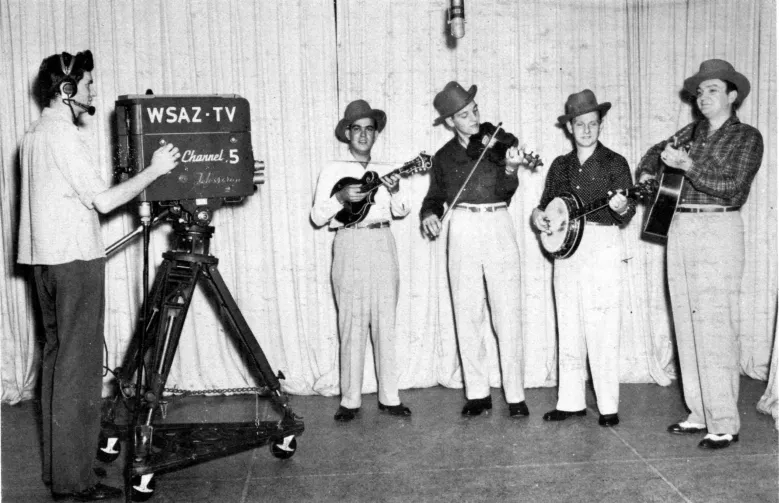
At its core, traditional bluegrass relies on acoustic string instrumentation: guitar, mandolin, banjo, fiddle, and upright bass. These instruments are not interchangeable; each plays a specific rhythmic and tonal role. The mandolin chop replaces percussion. The banjo drives momentum. The bass provides time and gravity. The fiddle carries emotional weight. The guitar anchors harmony and pulse.
When these roles are respected, the music immediately situates itself within tradition — even if the song itself is new.
Arrangement and Restraint
Traditional bluegrass values clarity and balance over complexity. Arrangements are typically spare and intentional. Each instrument gets space, and no single element overwhelms the whole.
Instrumental breaks usually follow the melody closely. Improvisation exists, but it is melodic rather than exploratory. Players embellish rather than reinvent. This restraint reflects bluegrass’s communal roots — the music was designed to be played together, not to spotlight individual virtuosity at the expense of the song.
Production choices reinforce this aesthetic. Traditional bluegrass recordings favor clean, honest sound. Studio effects are minimal. Performances feel immediate and reproducible — as though the band could step off the stage and play the same song in a parking lot jam without adjustment.
Song Structure and Storytelling
Traditional bluegrass songs tend to follow familiar forms: verses that advance a story, choruses that reinforce its emotional core, and instrumental breaks that echo the vocal line. These structures are not accidental. They evolved to support storytelling and group performance.
Lyrics are almost always narrative-driven. Even abstract emotions are grounded in concrete images — a road, a train, a home, a mountain, a goodbye. Bluegrass songs don’t just describe feelings; they place those feelings in a physical and cultural landscape.
Themes repeat across generations: longing, loss, faith, redemption, work, family, mortality. These subjects endure because they remain relevant, not because tradition demands them.
Vocal Identity and the “High Lonesome” Sound
Vocals are one of the strongest markers of traditional bluegrass. Lead singing is typically direct and unadorned, often pushed slightly higher than conversational comfort. Harmony parts are close, tense, and emotionally charged.
This sound traces directly back to early bluegrass figures like Bill Monroe, whose vocal style established the emotional edge that still defines the genre. The so-called high lonesome sound isn’t about volume or range — it’s about vulnerability. It allows joy and sorrow to coexist in the same note.
Songs that lean into this vocal approach — even modern compositions — often feel traditional because they tap into that emotional lineage.
Lineage, Repetition, and Adoption
Perhaps the most important factor in a song becoming traditional is use. Bluegrass tradition is collective, not authoritative. There is no official body that declares a song traditional. The community decides — slowly.
A song begins as new. Then other bands start playing it. It shows up at jam sessions. Audiences recognize it within a few notes. Over time, the song detaches from its original author and becomes shared property of the genre.
This is how material associated with artists like Flatt & Scruggs and Stanley Brothers transitioned from contemporary recordings to foundational repertoire. Their songs didn’t become traditional because of commercial success alone — they endured because musicians kept choosing them.
Time Is Necessary — But Not Sufficient
Age helps, but it is not enough. Some songs from the earliest days of bluegrass never entered the traditional canon, while others written decades later now feel inseparable from it.
Time functions as a filter. Songs that continue to be played prove their structural strength, emotional relevance, and musical usefulness. Those that fade were often too tied to trends, personalities, or production styles that did not age well.
Tradition, in this sense, is survival.
Tradition as Continuity, Not Nostalgia
True traditional bluegrass is not about recreating the past note for note. It is about continuity — carrying forward a shared musical understanding while allowing room for individual voice.
A song feels traditional when it honors the idiom without parody, when it fits comfortably alongside older standards, and when it invites participation rather than demanding attention.
In the end, a traditional bluegrass song doesn’t announce itself as such. It simply feels familiar — even the first time you hear it — as though it has been waiting patiently for its turn to be sung.
 World Bluegrass Day®
Leave a comment