
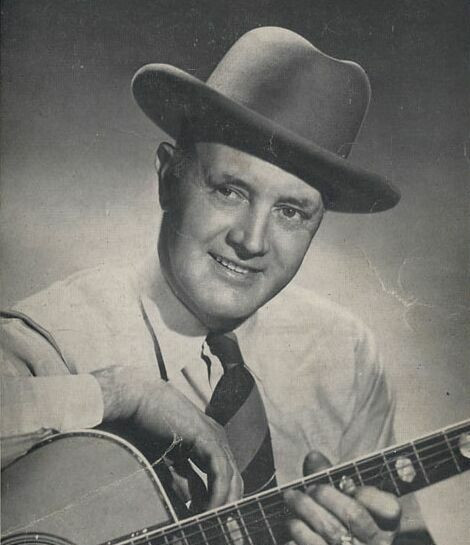
Before bluegrass had a name—before the sound crystallized into a defined genre—it lived in experimentation, family harmony, and the restless energy of musicians trying to sharpen older traditions into something new. In that crucial, often overlooked phase stands Charlie Monroe: a bandleader, singer, and guitarist whose influence on early bluegrass runs deeper than history often acknowledges.
Charlie Monroe is frequently remembered only in relation to his younger brother, Bill Monroe. Yet long before Bill Monroe stood alone at the center of bluegrass history, Charlie was a driving force—helping shape the musical environment from which bluegrass would emerge, and playing an important precursor role in the musical period that fed directly into what would later be called bluegrass.
Early Life and Musical Beginnings
Charlie Monroe was born on July 4, 1903, in Rosine, Kentucky, into a family where music was as natural as conversation. The Monroe household was steeped in old-time fiddle tunes, gospel harmonies, and the rural musical traditions of western Kentucky. Charlie gravitated early toward guitar and vocals, developing a strong rhythmic sense and a clear, expressive singing style.
As an older brother, Charlie naturally assumed a leadership role. When Bill showed early promise on the mandolin, Charlie recognized his talent and brought him into the professional world. In the early 1930s, the brothers formed The Monroe Brothers, a duo that would quickly become one of the most successful and influential acts in country music.
The Monroe Brothers: A Crucial Foundation
From 1934 until their split in 1938, Charlie and Bill Monroe worked as a tightly bonded duo, rising to prominence through radio performances and touring before recording extensively between 1936 and 1938. Their music featured close harmony singing, driving rhythm, and instrumental clarity—elements that would later become central to bluegrass.
Charlie’s role in the duo was substantial. He handled lead vocals on many songs, anchored the rhythm guitar, and helped shape arrangements that balanced emotional directness with precision. His singing was smooth, confident, and deeply rooted in country and gospel traditions, providing a steady counterpoint to Bill’s sharper, more aggressive mandolin work.
These years were not simply a prelude to bluegrass—they were a laboratory. The Monroe Brothers experimented with tempo, harmony, and instrumental roles, pushing old-time music toward something more structured and forward-driving. This period of collaboration shaped the musical foundation upon which bluegrass would later be built.
Career After the Split
When the Monroe Brothers parted ways in 1938, the split was decisive. Bill went on to form the Blue Grass Boys and pursue a harder-edged, mandolin-driven sound that would soon define bluegrass. Charlie, meanwhile, formed Charlie Monroe and the Kentucky Pardners, continuing to build on the country and harmony-driven style he had helped pioneer.
Charlie’s band enjoyed success on radio and recordings through the late 1930s and 1940s. His music remained rooted in traditional country, gospel quartets, and brother-duet harmony, but it retained the tightness and professionalism that had characterized the Monroe Brothers’ work. While Bill pushed aggressively into new territory, Charlie refined and preserved the transitional sound that connected old-time music to emerging bluegrass.
Under the name Charlie Monroe and the Kentucky Pardners, he recorded steadily and worked the national radio circuit into the late 1940s, maintaining a visible presence in country music even as his brother’s sound moved in a new direction.
This divergence is key to understanding Charlie Monroe’s importance. He did not follow bluegrass down its hardest, fastest path—but by maintaining the musical bridge between traditions, he helped ensure that the roots of bluegrass remained visible and accessible.
Musical Style and Contributions
Charlie Monroe’s style emphasized structure, rhythm, and vocal clarity. As a guitarist, he provided a solid, driving foundation rather than flashy leads. His rhythm playing was disciplined and precise, reinforcing the pulse that allowed harmony and melody to shine.
Vocally, Charlie favored emotional restraint and clarity. His singing reflected the influence of early country crooners and gospel quartets, and his phrasing prioritized storytelling over showmanship. These qualities helped establish a vocal approach that later bluegrass singers would adapt and intensify.
Perhaps his most significant contribution, however, was conceptual. Charlie Monroe demonstrated that old-time and country music could be professionalized—tightened, arranged, and presented with consistency—without losing their emotional core. That idea became a cornerstone of bluegrass.
Influence on Bluegrass and American Roots Music
Charlie Monroe’s influence on bluegrass is indirect but foundational. By creating a professional musical environment in which Bill Monroe could develop, he helped set the stage for bluegrass’s birth. The discipline, harmony concepts, and rhythmic drive that Bill later sharpened were forged during their years together.
Moreover, Charlie’s post-split career preserved the transitional sound that many later musicians would draw from—especially those working at the intersection of country, gospel, and early bluegrass. His work reminds us that genres do not emerge fully formed; they evolve through dialogue, disagreement, and divergence.
In this sense, Charlie Monroe represents an essential truth about bluegrass history: innovation requires both those who push forward and those who hold the center.
Later Years and Legacy
Charlie Monroe continued performing and recording through the 1950s, then largely stepped away from full-time work, with occasional appearances again in the early 1970s. He died on September 27, 1975, in Reidsville, North Carolina, leaving a catalog that captures the crucial pre-bluegrass duet and band style that helped set the stage for what came next.
Conclusion
Charlie Monroe did not invent bluegrass—but without him, bluegrass might never have taken shape the way it did. As a bandleader, vocalist, guitarist, and collaborator, he helped refine the musical language that his younger brother would later crystallize into a genre.
In the history of bluegrass, Charlie Monroe stands as a reminder that foundations are often built quietly. His influence lives not in a single defining moment, but in the musical soil from which bluegrass grew—rich, disciplined, and deeply rooted in tradition.
 World Bluegrass Day®
Leave a comment