
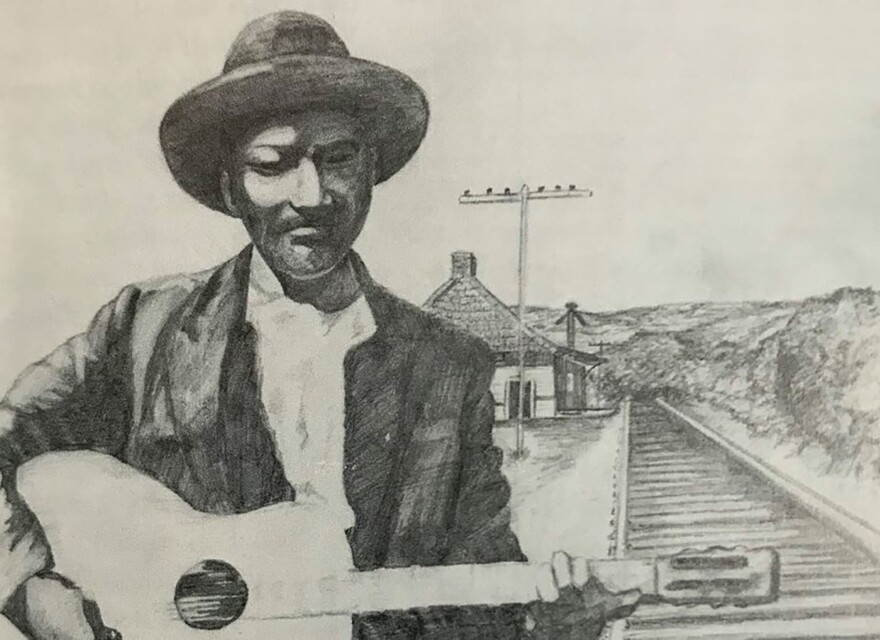
Long before bluegrass had a name—before mandolins cut through the air with razor clarity and banjos rolled in three-finger precision—there was a sound taking shape in the hills of western Kentucky. It was rhythmic, expressive, and deeply human. At the center of that sound, though rarely recorded and almost never photographed, stood Arnold Shultz.
Shultz is one of the most important—and least known—figures in the story of bluegrass. He did not play in a bluegrass band, nor did he record commercially. Yet his influence reached directly into the musical development of Bill Monroe, shaping elements of rhythm and feel that would later become central to the genre.
To understand Arnold Shultz is to understand that bluegrass did not emerge in isolation. It grew from a meeting of traditions, and Shultz stood at one of those important intersections.
Early Life and Musical Background
Arnold Shultz was born in the late 19th century in western Kentucky, likely around 1886, though exact records are limited. He was an African American musician in a region where Black and white musical traditions existed in close proximity, sometimes separate, but often influencing one another in subtle and meaningful ways.
Shultz was known locally as a highly skilled guitarist. Accounts from the region describe him as a musician with strong rhythm and expressive timing—qualities that set him apart from many traditional players of the time. He is believed to have performed in local settings and community gatherings, sharing music that reflected the broader influences of the region, including blues and ragtime traditions.
Like many musicians of his era, particularly African American musicians in rural communities, Shultz left behind no commercial recordings. What remains are the recollections of those who heard him and the influence he carried forward through others.
The Connection to Bill Monroe
Arnold Shultz’s place in bluegrass history is most clearly understood through his connection to Bill Monroe. Monroe later recalled learning from Shultz during his youth in Kentucky, describing him as an important musical influence.
What Monroe took from Shultz was not a specific repertoire, but a deeper sense of rhythm and musical feel. Shultz’s playing is understood to have emphasized groove, timing, and expressive phrasing—qualities that Monroe would later incorporate into his mandolin style.
These elements became part of Monroe’s distinctive sound: a sharp, driving attack paired with a subtle sense of swing and emotional weight. While Monroe drew from many influences in shaping bluegrass, Shultz is widely considered to have played a meaningful role in that development.
Musical Style and Influence
Because no recordings of Arnold Shultz are known to exist, his style must be understood through historical accounts and the musicians he influenced.
He is remembered as a guitarist with:
- A strong rhythmic sense
- Expressive timing and phrasing
- An ability to reflect multiple musical traditions common to the region
These qualities suggest a style that blended structure with flexibility, allowing music to feel both grounded and alive. In contrast to more rigid interpretations of traditional string band music, this approach introduced a sense of movement and nuance that would later become important in bluegrass.
For musicians like Monroe, this way of playing demonstrated that traditional music could absorb outside influences while maintaining its identity.
Influence on Bluegrass and American Music
Arnold Shultz represents an important example of the cultural exchange that shaped early American music. His influence on Bill Monroe highlights the role that African American musicians played in the development of what would later become bluegrass.
While Shultz did not participate directly in the creation of bluegrass, his musical approach is widely considered to have contributed to Monroe’s development as an artist. Through Monroe, elements of that influence became part of the foundation of bluegrass itself.
His story serves as a reminder that musical traditions are rarely isolated. They are built through shared experiences, exposure, and the blending of different cultural voices.
Later Life and Legacy
Arnold Shultz died in 1931, more than a decade before bluegrass emerged as a defined genre. He did not live to see the music he helped influence take shape on a national stage.
In the years since, his legacy has grown through the recognition of historians and musicians who have sought to better understand the roots of bluegrass. Though documentation remains limited, his role in shaping one of the genre’s central figures has secured his place in its history.
He remains an elusive figure—known more through influence than documentation—but no less important because of it.
Conclusion
Arnold Shultz did not set out to create bluegrass. He played music rooted in his time, his community, and his experience. Yet through his influence on Bill Monroe, that sound became part of something larger.
His story reminds us that bluegrass is not the product of a single moment or a single person. It is the result of shared traditions, quiet exchanges, and influences that are not always visible but are deeply felt.
In the history of bluegrass, Arnold Shultz may not be widely known—but he is one of its deepest roots.
Leave a Reply