
In bluegrass, tradition runs deep—but so does the need to move forward. Few artists have balanced those two forces as naturally as Peter Rowan. With a voice rooted in tradition and a musical vision that reached far beyond it, Rowan became one of the most important bridges between first-generation bluegrass and the broader acoustic movement that followed.
He did not simply preserve bluegrass. He lived inside it, then carried it into new spaces—without ever losing sight of where it came from.
Early Life and Musical Beginnings
Peter Rowan was born on July 4, 1942, in Boston, Massachusetts. Unlike many first-generation bluegrass musicians, Rowan did not grow up in the Appalachian South. Instead, he discovered the music through recordings, radio, and the emerging folk revival of the late 1950s and early 1960s.
Drawn to the sound of traditional bluegrass, Rowan immersed himself in the style, studying the music closely and developing his guitar playing and vocal approach. His early exposure to folk and traditional music gave him a broad musical foundation, but it was bluegrass that became his central focus.
By the early 1960s, Rowan had begun performing professionally, quickly earning recognition for both his singing and songwriting.
With Bill Monroe and the Blue Grass Boys
A defining moment in Rowan’s career came when he joined Bill Monroe and the Blue Grass Boys in 1964. At just 22 years old, Rowan stepped into one of the most demanding roles in bluegrass—as lead singer in Monroe’s band.
His tenure with Monroe placed him directly inside the tradition at its source. Rowan absorbed not only the musical style, but also the discipline and philosophy that Monroe brought to bluegrass. During this time, he developed a deeper understanding of timing, phrasing, and the emotional delivery that defines the genre.
Rowan also contributed as a songwriter, most notably with “Panama Red,” a song that would later become one of his most widely recognized compositions.
Old & In the Way and a New Audience
In the early 1970s, Rowan became a founding member of the influential group Old & In the Way, alongside Jerry Garcia, David Grisman, and Vassar Clements.
The band brought bluegrass to a new audience, particularly within the counterculture movement of the time. Their performances combined traditional material with a relaxed, exploratory energy that appealed to listeners beyond the genre’s usual boundaries.
Rowan’s songwriting and vocals were central to the group’s identity. Songs like “Panama Red” became defining pieces of their repertoire, blending storytelling, humor, and strong melody with bluegrass instrumentation.
Old & In the Way did not replace traditional bluegrass—it expanded its reach, and Rowan stood at the center of that expansion.
Musical Style and Songwriting
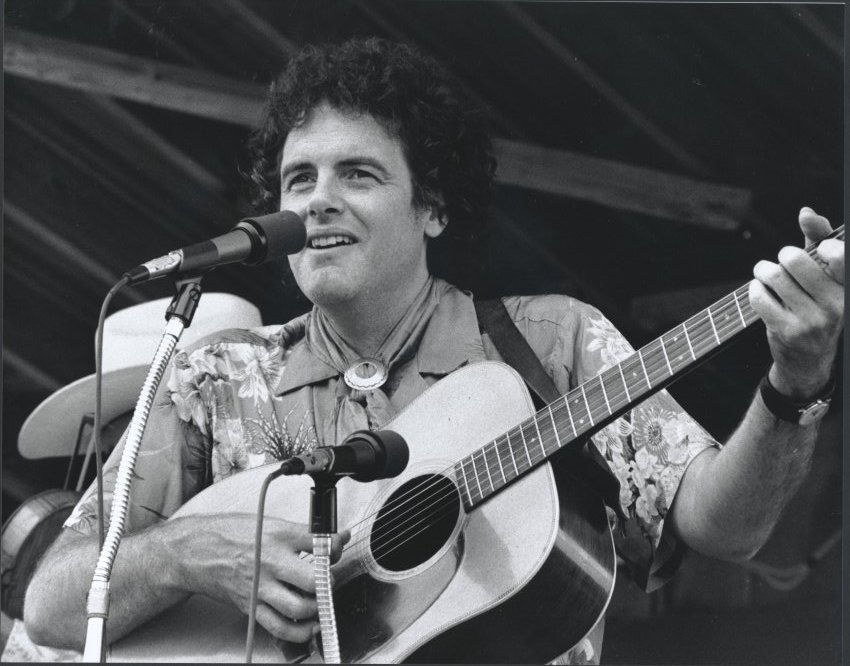
Peter Rowan’s musical style is defined by versatility and authenticity. As a guitarist, he provides solid rhythmic support, always grounded in the structure of bluegrass. As a vocalist, his tone is clear, expressive, and adaptable—capable of delivering traditional songs with sincerity or original material with a distinctive voice.
His songwriting has been one of his most significant contributions. Rowan has written extensively across bluegrass, folk, and roots music, creating songs that reflect both tradition and individuality. His lyrics often draw from storytelling, personal experience, and broader cultural themes, giving his work a timeless quality.
Unlike some artists who move away from bluegrass as they evolve, Rowan has consistently returned to it, using it as a foundation rather than a limitation.
Influence on Bluegrass and Acoustic Music
Peter Rowan’s influence lies in his ability to connect generations. As a member of Bill Monroe’s band, he is directly tied to the first generation of bluegrass. Through his work in the 1970s and beyond, he helped bring that tradition to new audiences and new musical contexts.
He demonstrated that bluegrass could grow without losing its identity—that it could absorb new influences while remaining rooted in its core elements. This approach helped pave the way for later developments in progressive bluegrass and acoustic music.
Rowan’s career also reflects the broader evolution of American roots music, where boundaries between genres are often fluid, and tradition serves as a starting point rather than an endpoint.
Later Years and Legacy
Peter Rowan has remained active for decades, continuing to perform, record, and collaborate with a wide range of musicians. His work spans traditional bluegrass, folk, and acoustic music, yet consistently reflects the influence of his early years with Bill Monroe.
Over time, Rowan has become recognized not only as a performer, but as a songwriter and cultural figure within the bluegrass community. His contributions have earned him respect across generations of musicians and listeners.
Conclusion
Peter Rowan’s career is a story of connection—between past and present, tradition and exploration, structure and freedom. From his early days with Bill Monroe to his role in bringing bluegrass to new audiences, he has remained a steady and thoughtful voice within the music.
He did not simply follow the path of bluegrass.
He helped extend it.
And in doing so, he ensured that the music could continue to grow while staying true to its roots.
Leave a Reply