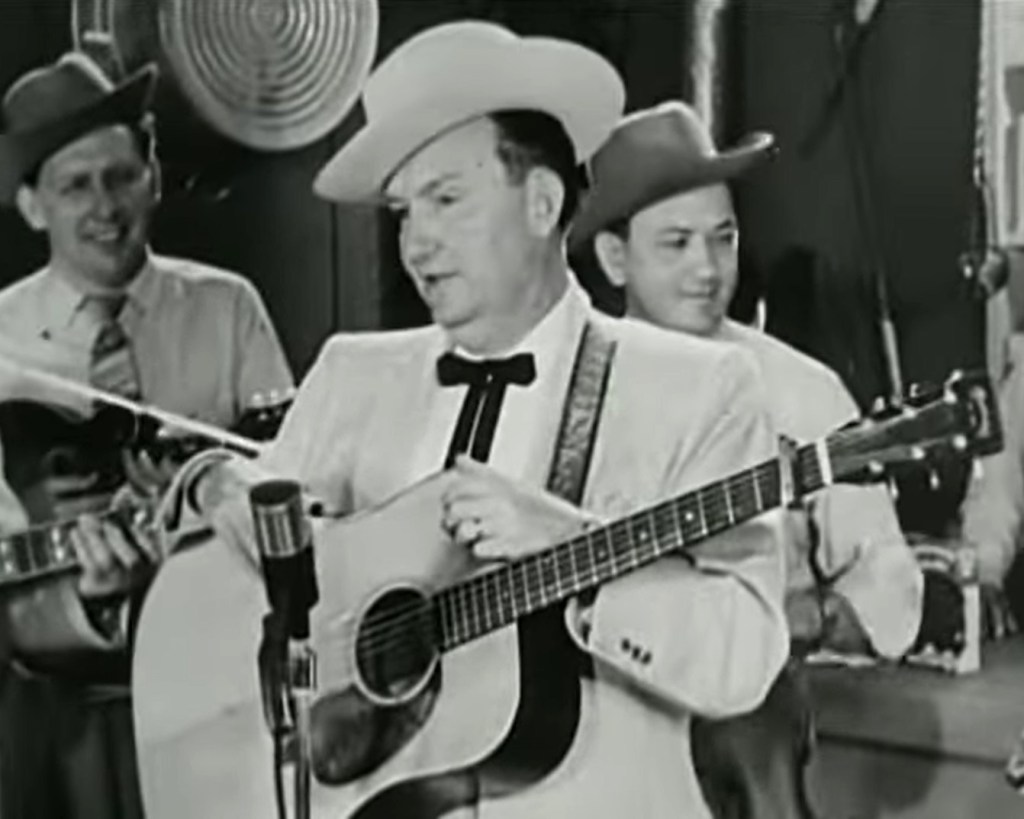
Lester Flatt was a foundational figure in American bluegrass music, best known for his rich, smooth vocals and rhythm guitar work. As one half of the legendary duo Flatt & Scruggs, and a former member of Bill Monroe’s Blue Grass Boys, Flatt helped shape the sound and structure of bluegrass music that continues to influence generations.
Early Life and Musical Roots
Lester Raymond Flatt was born on June 19, 1914, in Overton County, Tennessee. Raised in a musical family in the foothills of the Appalachians, Flatt grew up immersed in gospel and old-time string music. He developed a deep love for traditional Southern songs and began performing at a young age.
By the late 1930s, Flatt was performing professionally and soon became a sought-after rhythm guitarist and singer in the growing country and bluegrass scenes.
With Bill Monroe and the Birth of Bluegrass
In 1945, Flatt joined Bill Monroe and His Blue Grass Boys, becoming a key part of a lineup that would mark the true beginning of bluegrass music. Alongside Earl Scruggs, Chubby Wise, and Howard Watts, Flatt helped Monroe define the high-energy, string-driven sound that set bluegrass apart from earlier country styles.
Flatt’s warm baritone vocals, tight harmonies, and strong rhythm guitar provided the perfect contrast to Monroe’s high tenor and driving mandolin. Songs like “Blue Moon of Kentucky” became bluegrass standards with Flatt’s contributions.
Flatt & Scruggs: The Foggy Mountain Sound
In 1948, Flatt and banjo player Earl Scruggs left Monroe’s band to form their own group: Flatt & Scruggs and the Foggy Mountain Boys. With this band, they took bluegrass to new commercial heights. Their music struck a perfect balance between tradition and innovation, featuring Scruggs’ three-finger banjo style and Flatt’s down-home vocals and songwriting.
They recorded dozens of now-classic songs, including:
- “Foggy Mountain Breakdown”
- “Roll in My Sweet Baby’s Arms”
- “The Ballad of Jed Clampett” (theme song for The Beverly Hillbillies)
- “Salty Dog Blues”
Flatt was also a talented songwriter, contributing to many original tunes that remain central to bluegrass repertoire today.
Fame, Television, and Influence
Flatt & Scruggs became household names in the 1960s thanks to television appearances and soundtrack contributions. Their song “Foggy Mountain Breakdown” was famously used in the film Bonnie and Clyde, introducing bluegrass to new audiences.
However, artistic tensions grew between Flatt’s preference for tradition and Scruggs’ interest in progressive styles. The duo parted ways in 1969.
Lester Flatt and the Nashville Grass
After the split, Flatt formed his own band, The Nashville Grass, which focused on traditional bluegrass. He continued to tour, record, and appear on national television, serving as a bridge between early bluegrass and the emerging new generation of pickers and singers.
Even in his later years, Flatt remained a charismatic performer whose voice symbolized authenticity, warmth, and the spirit of Appalachian music.
Honors and Legacy
Lester Flatt passed away on May 11, 1979, but his impact on bluegrass remains undeniable. He received numerous honors, including:
- Induction into the Country Music Hall of Fame (1985, with Earl Scruggs)
- IBMA Hall of Fame recognition
- Ongoing reverence in bluegrass circles as one of the genre’s most influential figures
Today, artists from Ricky Skaggs to The Earls of Leicester honor Flatt’s legacy, and his songs remain core material at bluegrass jams and festivals worldwide.
Conclusion
Lester Flatt wasn’t just a great singer—he was the voice of bluegrass. His unpretentious style, heartfelt delivery, and steadfast commitment to tradition helped define an American musical form. Whether singing harmony with Bill Monroe or fronting the Foggy Mountain Boys, Flatt left an indelible mark on bluegrass and country music.
His voice may be gone, but his songs and spirit continue to roll in our sweet baby’s arms forever.

 World Bluegrass Day®
Leave a reply to Charlie Cline: The Sideman Who Shaped the Sound of Bluegrass – World Bluegrass Day® Cancel reply