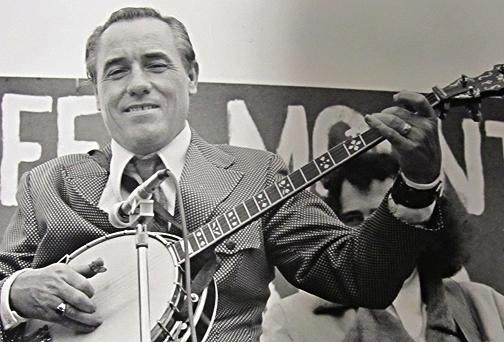
Earl Scruggs was more than just a banjo player—he was a musical revolutionary. With his groundbreaking three-finger picking style, Scruggs transformed the banjo from a rhythmic background instrument into a dazzling lead voice. His innovations not only helped define the bluegrass sound but also elevated the banjo to new levels of popularity and respect.
Early Life and Musical Roots
Earl Eugene Scruggs was born on January 6, 1924, in Shelby, North Carolina, into a musical farming family. He started playing banjo at age four, developing his skills by listening to older musicians and experimenting on his own. But it was the loss of his father—who had played banjo himself—that motivated young Earl to focus more deeply on the instrument.
By his early teens, Scruggs had developed a unique way of playing the banjo using three fingers—thumb, index, and middle—rather than the older two-finger or clawhammer styles. This “three-finger style” created a rapid, rolling sound full of drive and complexity. It would soon become known simply as the “Scruggs style.”
Blue Grass Boys and the Birth of Bluegrass
In 1945, Scruggs joined Bill Monroe and His Blue Grass Boys, alongside guitarist and vocalist Lester Flatt. That lineup—featuring Monroe on mandolin, Flatt on guitar, and Scruggs on banjo—is considered the birth of bluegrass music.
Scruggs’ banjo style electrified audiences. His precise, fluid rolls and syncopated rhythms added fire and flair to Monroe’s already intense sound. Songs like “Blue Grass Breakdown” and “Molly and Tenbrooks” showcased the banjo as a lead instrument and changed American music forever.
Flatt & Scruggs and the Foggy Mountain Boys
In 1948, Scruggs and Flatt left Monroe’s band to form Flatt & Scruggs and the Foggy Mountain Boys. With this group, they brought bluegrass to a national stage, recording a string of hits and developing what became known as the Foggy Mountain sound—a blend of high-energy instrumentals, traditional ballads, and gospel harmonies.
Among their most famous recordings:
- “Foggy Mountain Breakdown” – A blazing instrumental that became an anthem for bluegrass and won a Grammy after being used in Bonnie and Clyde (1967).
- “The Ballad of Jed Clampett” – The theme song for The Beverly Hillbillies, which made Flatt & Scruggs household names in the 1960s.
- “Earl’s Breakdown”, “Ground Speed”, and many more banjo-driven classics.
Scruggs also developed a special banjo tuning wrench to quickly retune mid-song, featured in pieces like “Earl’s Breakdown”.
Musical Growth and Later Years
After Flatt & Scruggs parted ways in 1969 due to differing musical visions (Flatt favored tradition, Scruggs leaned toward experimentation), Scruggs formed the Earl Scruggs Revue with his sons. The group blended bluegrass with rock, folk, and country, introducing the banjo to younger and more diverse audiences during the 1970s.
Scruggs performed with everyone from Bob Dylan to Joan Baez, and appeared at major festivals including Newport Folk Festival and Live Aid. His musical curiosity and openness helped broaden the reach of bluegrass and banjo music far beyond its Appalachian roots.
Honors and Legacy
Earl Scruggs received nearly every major musical honor possible, including:
- Grammy Lifetime Achievement Award
- National Medal of Arts (1992)
- Induction into the Country Music Hall of Fame (1985, with Lester Flatt)
- Induction into the IBMA Hall of Fame
- Hollywood Walk of Fame Star
In 2001, he was the subject of a PBS special, and in 2006, the Earl Scruggs Center was established in his hometown of Shelby, North Carolina.
Scruggs passed away on March 28, 2012, at age 88, leaving behind a legacy that touched bluegrass, country, rock, and Americana.
Conclusion
Earl Scruggs didn’t just play the banjo—he transformed it. His style became the gold standard, inspiring thousands of musicians and lifting the instrument into the spotlight of American music. His creativity, openness to new genres, and devotion to musical excellence made him not only a pioneer of bluegrass, but one of the most influential instrumentalists of the 20th century.
From the rolling hills of North Carolina to concert halls around the world, Scruggs’ music continues to echo—fast, fearless, and forever unforgettable.

 World Bluegrass Day®
Leave a reply to Betty Amos: Bluegrass Banjo Trailblazer – World Bluegrass Day® Cancel reply